I arrived at Amankila already primed to notice things. Thirty years of magazine covers will do that to you. Two young girls in traditional Balinese dress met the car with floral offerings before I'd even properly stepped out, and within the first hour I caught myself hunting for the rest of it too. The folded charger. The ribbon on the cable. The towel refolded into a perfect square. As if checking off a list of things a proper Aman is supposed to do for you. It felt slightly forced, if I'm honest, this active searching for proof that the legend was real. A few days in, that searching just stopped. I stopped looking for the hotel to prove itself and started actually being there. That's when the feeling I'd expected to get at check-in finally showed up, on its own schedule rather than mine. No other Aman has made me think this hard about why I was there in the first place. I'm not sure that's an accident.
A hillside with no lobby
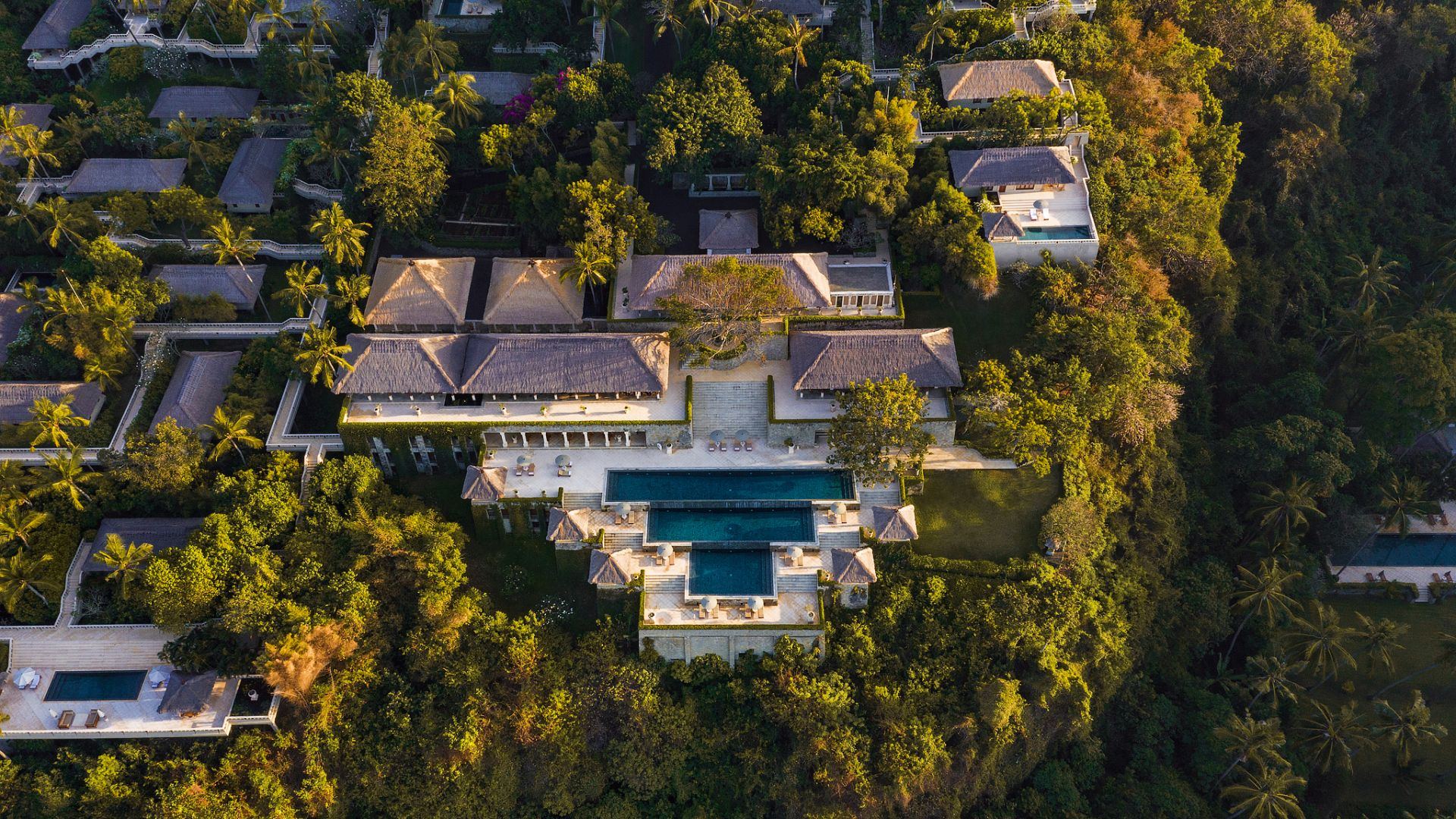
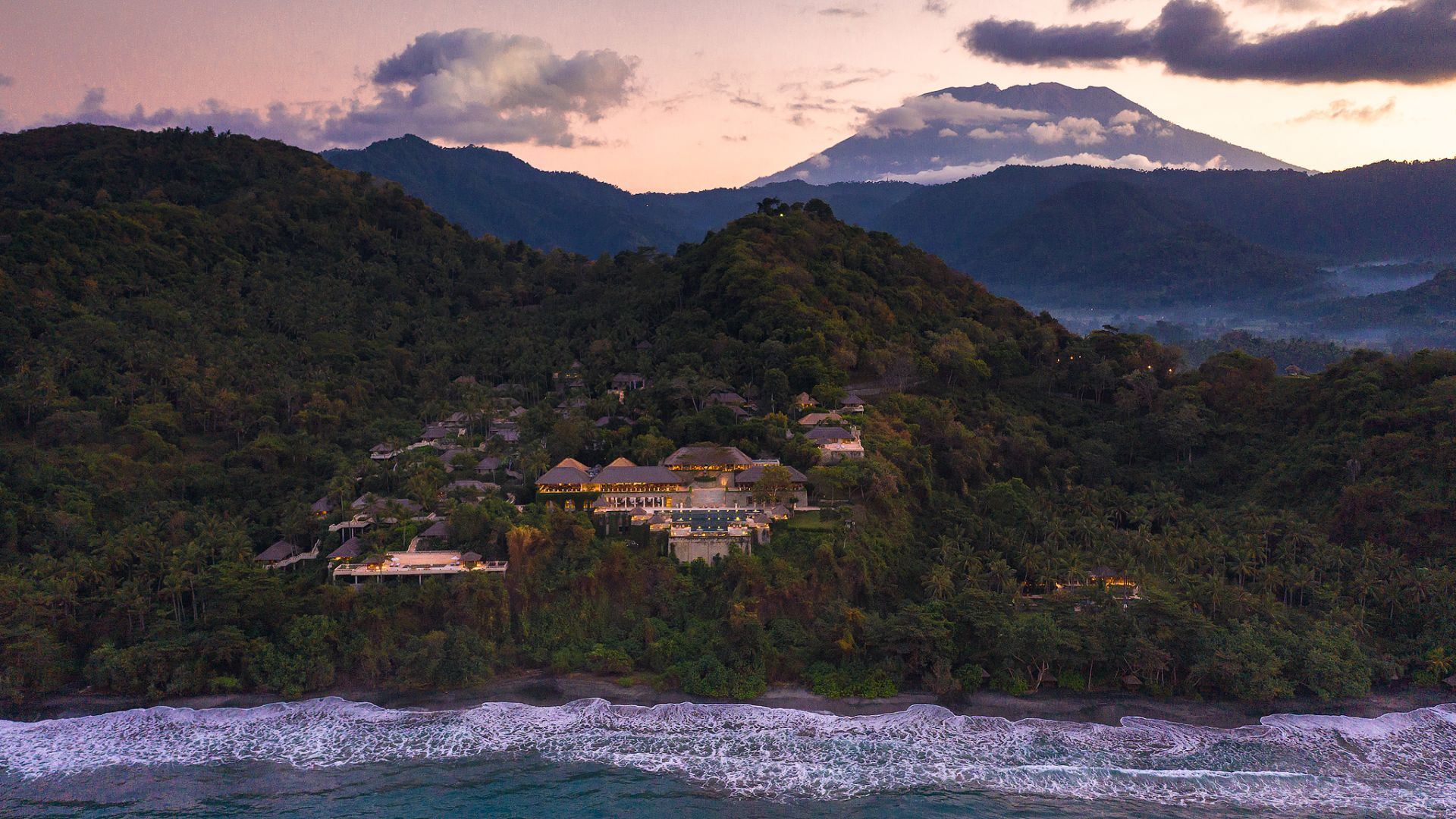
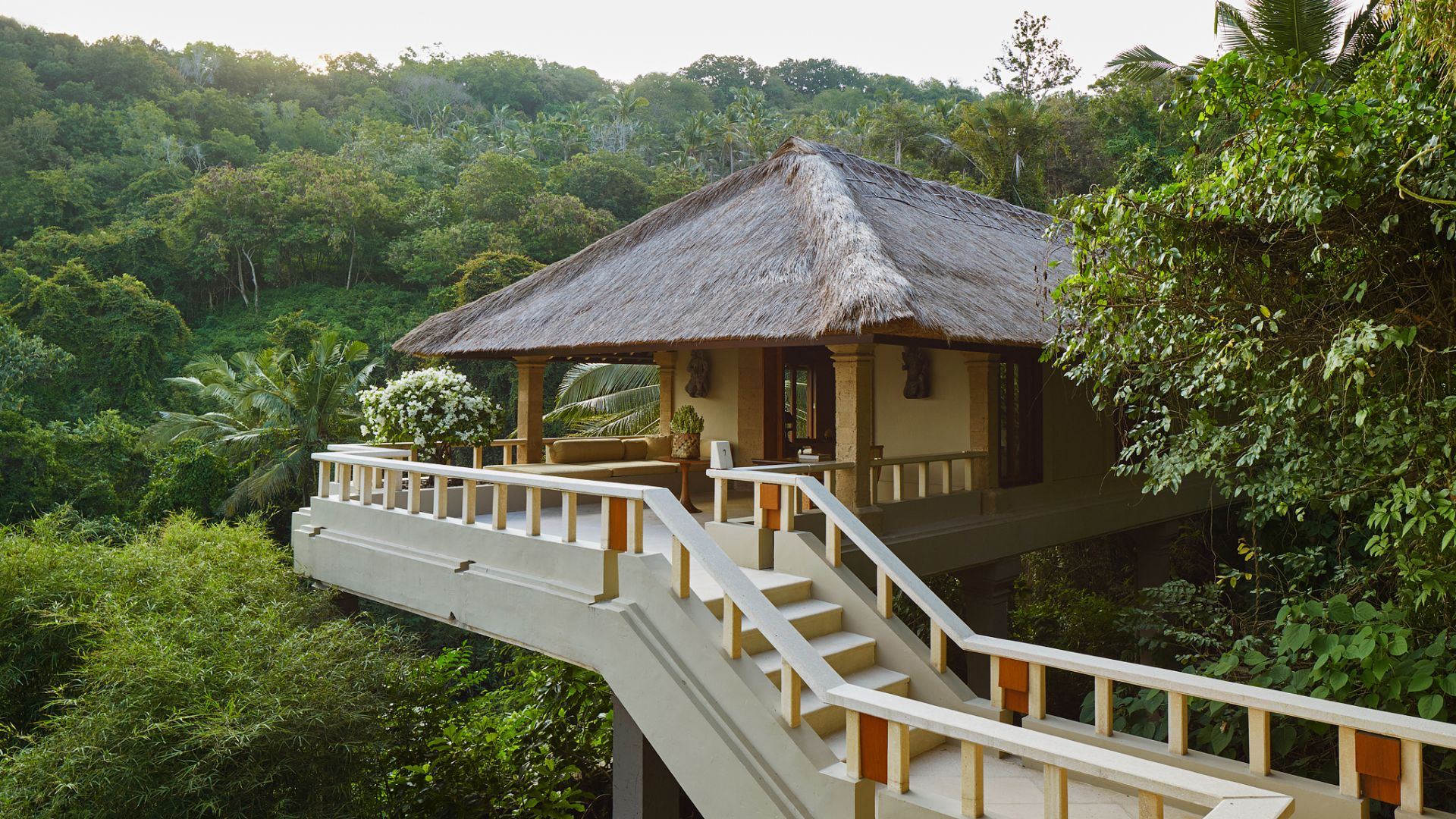
The car climbs, the gate opens, and there's a lot of hillside in front of you. No real lobby. No single building holding the place together. Ed Tuttle refused to build one when he designed this in 1992, the third resort Aman ever built. Instead he cut thirty four separate platforms into the slope. Each suite gets its own private ledge, all connected by raised timber walkways that thread through frangipani and bougainvillea and disappear around bends you can't quite see the end of. You walk this property constantly, far more than you'd expect at a hotel this size, and I never once minded it.
One afternoon I watched a gardener mowing the huge lawn near the main pool by hand, with a sickle, unhurried, as if the whole idea of a lawnmower had never occurred to anyone here and never would. Some afternoons I'd see a few young women moving quietly between the walkways too, laying small palm-leaf offerings at the shrines tucked along the way, the same daily ritual you'd find anywhere else on this island. Nobody stages that part. It happens whether or not a single guest is awake to see it. Almost everything else here has been arranged, carefully, to look like it hasn't been. Tuttle borrowed his design from actual royal water palaces at Ujung and Tirtagangga. What came out the other end is closer to Bali's highlight reel than to Bali itself. Cleaner than the villages just outside the gate. Quieter than the roads that got you here. A more beautiful version of the island than the island generally allows itself to be.
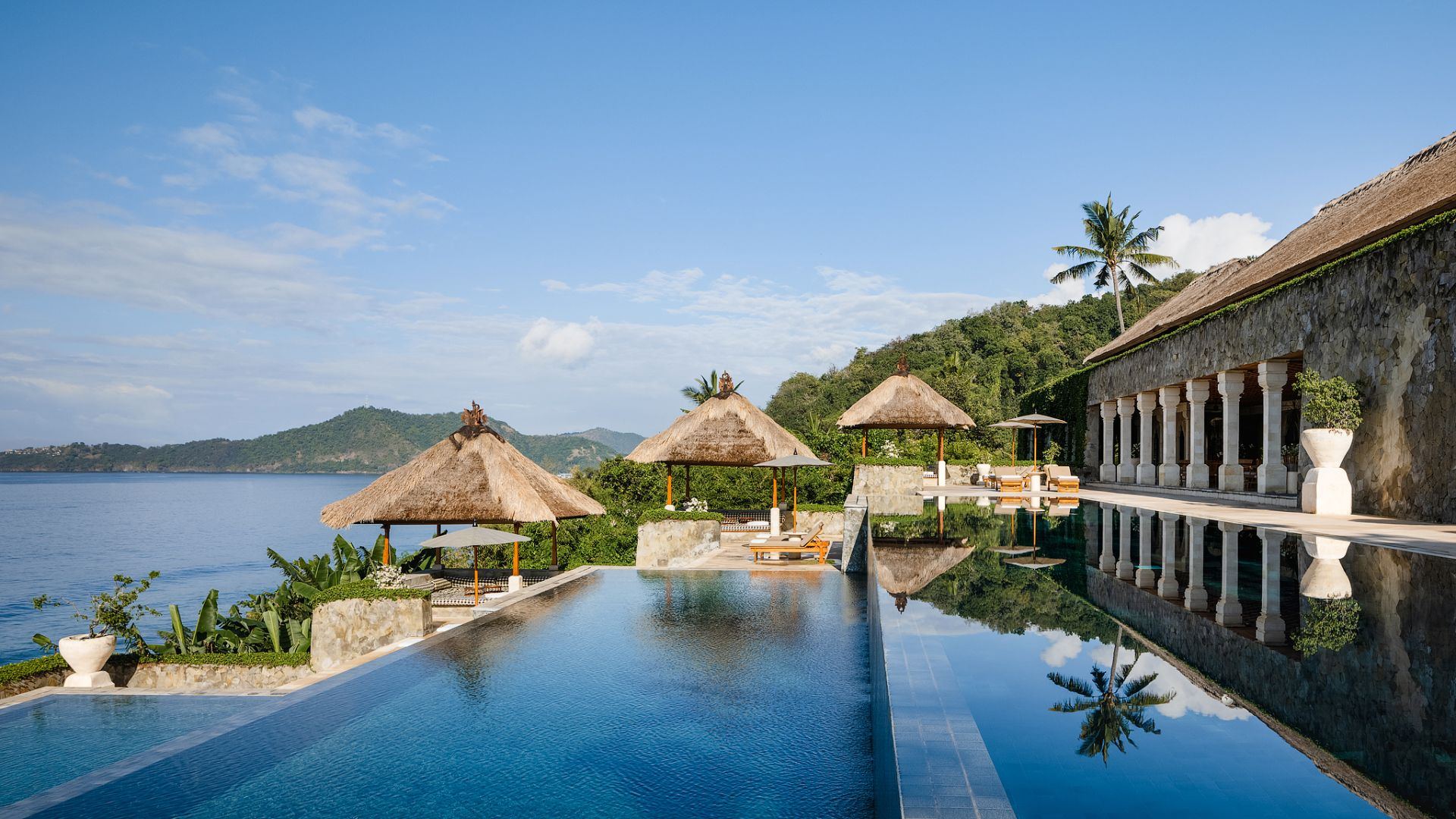
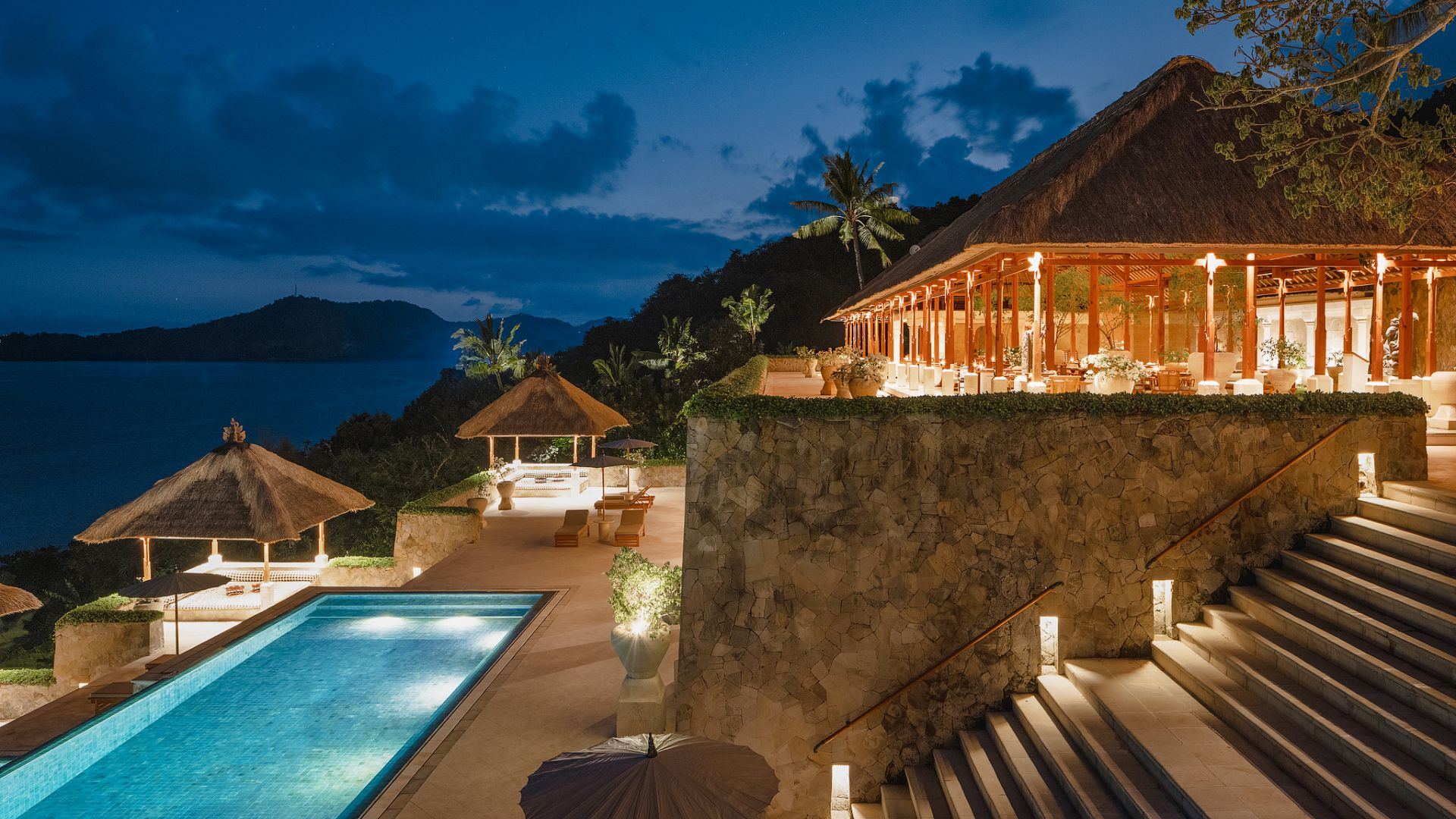
At the top of the hill, the ground opens into the three tier pool, the image most people already have fixed in their head long before they arrive. It cascades toward the Lombok Strait. Seeing it in person after decades of photographs is a strange thing. You already know exactly what it looks like, and it still gets you anyway.
The pool nobody uses
After a few days of admiring it from every angle, I found myself wanting something quieter, and drifting instead toward the one part of the resort nobody else seemed interested in. The pool down at the Beach Club, wrapped in every shade of green the jungle has, sits nearly empty most of the day. Everyone else stays up top, either in their own villa pool or at the famous one. There are roughly a hundred and fifty steps down from the Terrace pool to the beach, and a buggy waiting if you'd rather not take them, but the walk is worth doing on foot at least once.
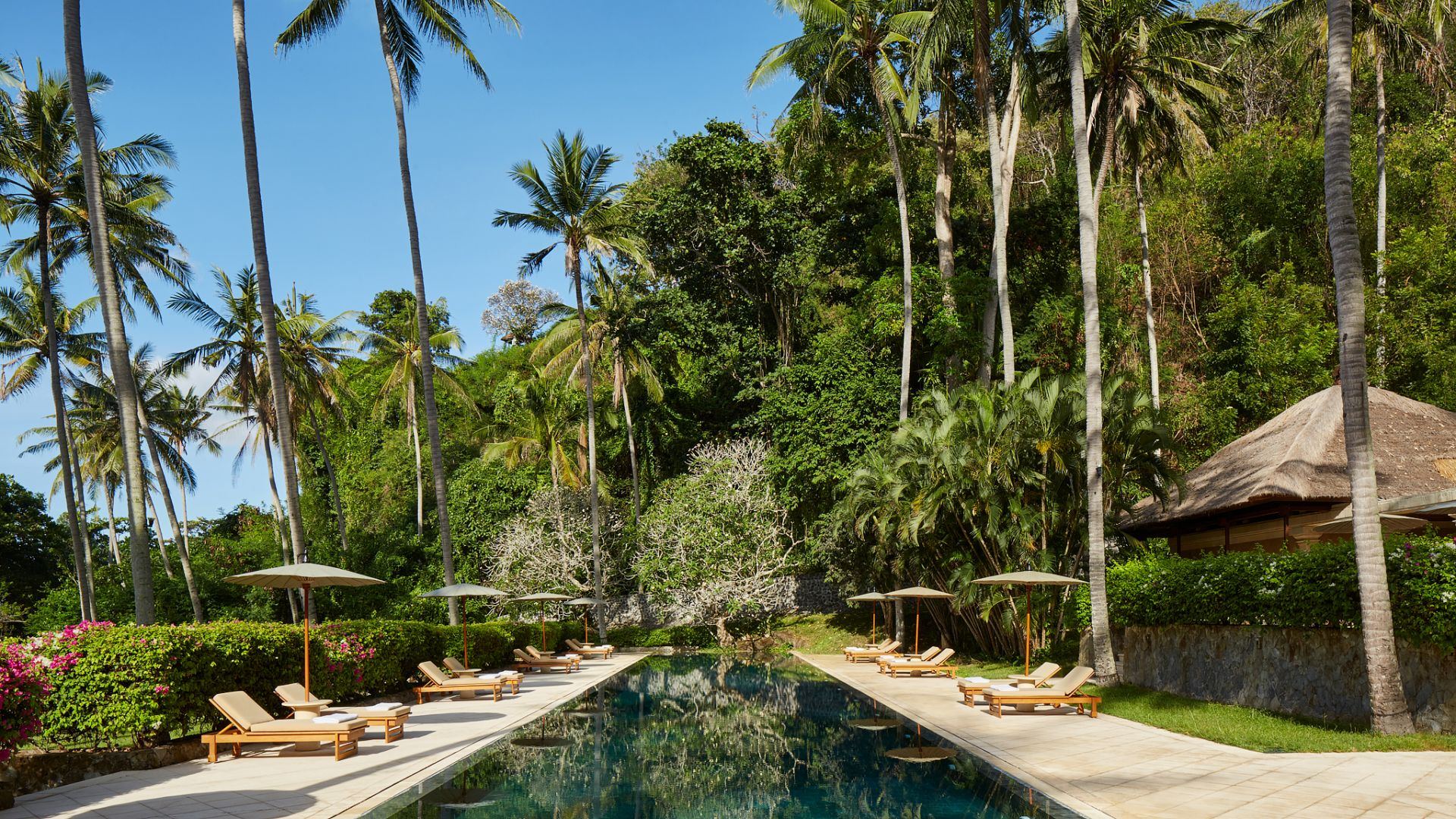
A short path leads through the trees toward the beach, past eight bales tucked so far into the bushes that you'd walk right past most of them without noticing. Lie in one and the rest of the world genuinely does seem to pass you by, in a way that even the famous pool, for all its fame, doesn't quite manage. The beach itself is black volcanic sand, flanked on one side by a rock outcrop that gives the whole stretch a slightly wild, unpolished feel. Nothing like the manicured version you'd expect from the photographs. Staff push watersports here properly, not the usual half hearted gesture toward a kayak nobody ever uses. They want you out on a Hobie Cat or bodyboarding, and they genuinely mean it. Every so often a small local fishing boat pulls in, fishermen going about their morning as if the resort behind them wasn't there at all. It's a fairly desolate stretch of coast, honestly, but that ruggedness, combined with almost nobody else around, made it close to the best beach experience I've had anywhere on this island.
The room I chose, and the ones I skipped
Suites vary enormously here, and it genuinely matters which one you book. The Indrakila comes with its own pool and a private angle past the temple point. The Kilasari, named after Amankila's own temple, adds a twelve metre pool and a separate entrance tucked high on the hillside. At the very top sits a two bedroom suite built for a family that wants to disappear from the rest of the resort entirely, with its own butler and enough space to genuinely lose someone in.
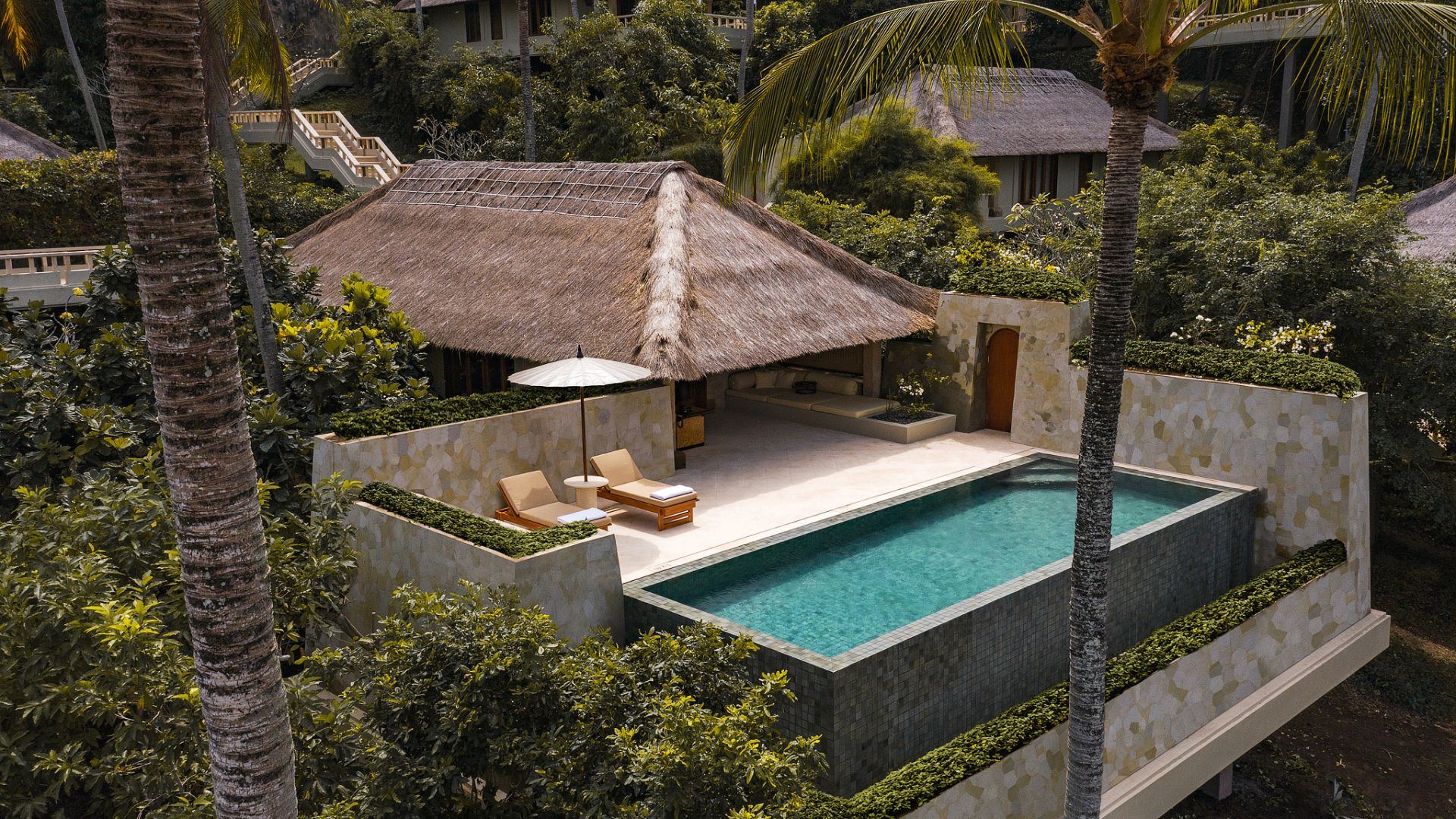
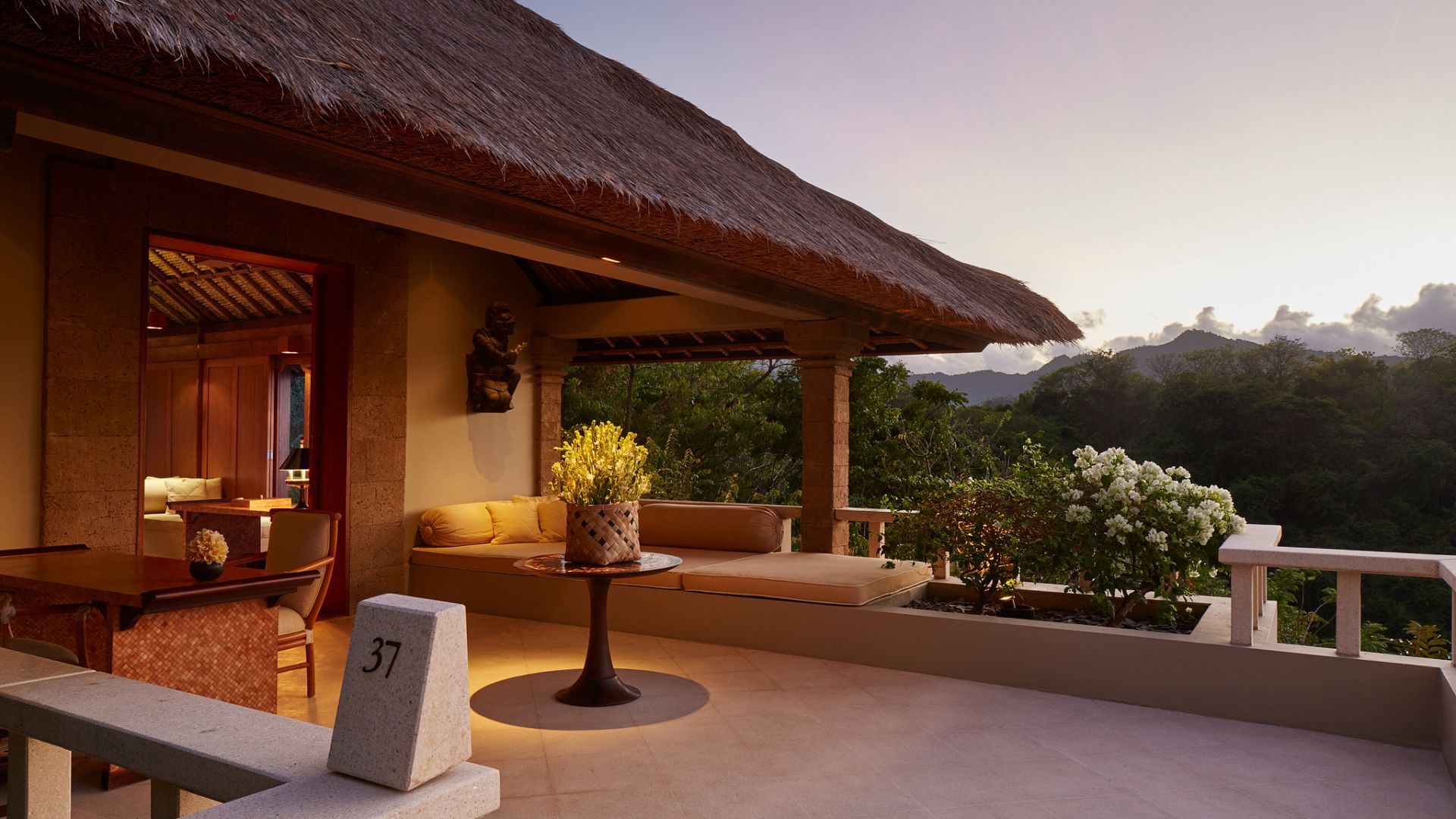
I went the other way and chose a Garden Suite, the entry category, stilted above the jungle with nothing in front of the terrace but green. Three pools were already stacked down the hillside and a fourth waited at the Beach Club, so having one outside my own door felt beside the point. The room shows its age a little. Coconut shell furniture, an older kind of comfort than a freshly built resort would offer. I didn't mind at all. The bed is the best I've slept in on this island, and most mornings that terrace did more for me than any spa treatment on the menu.
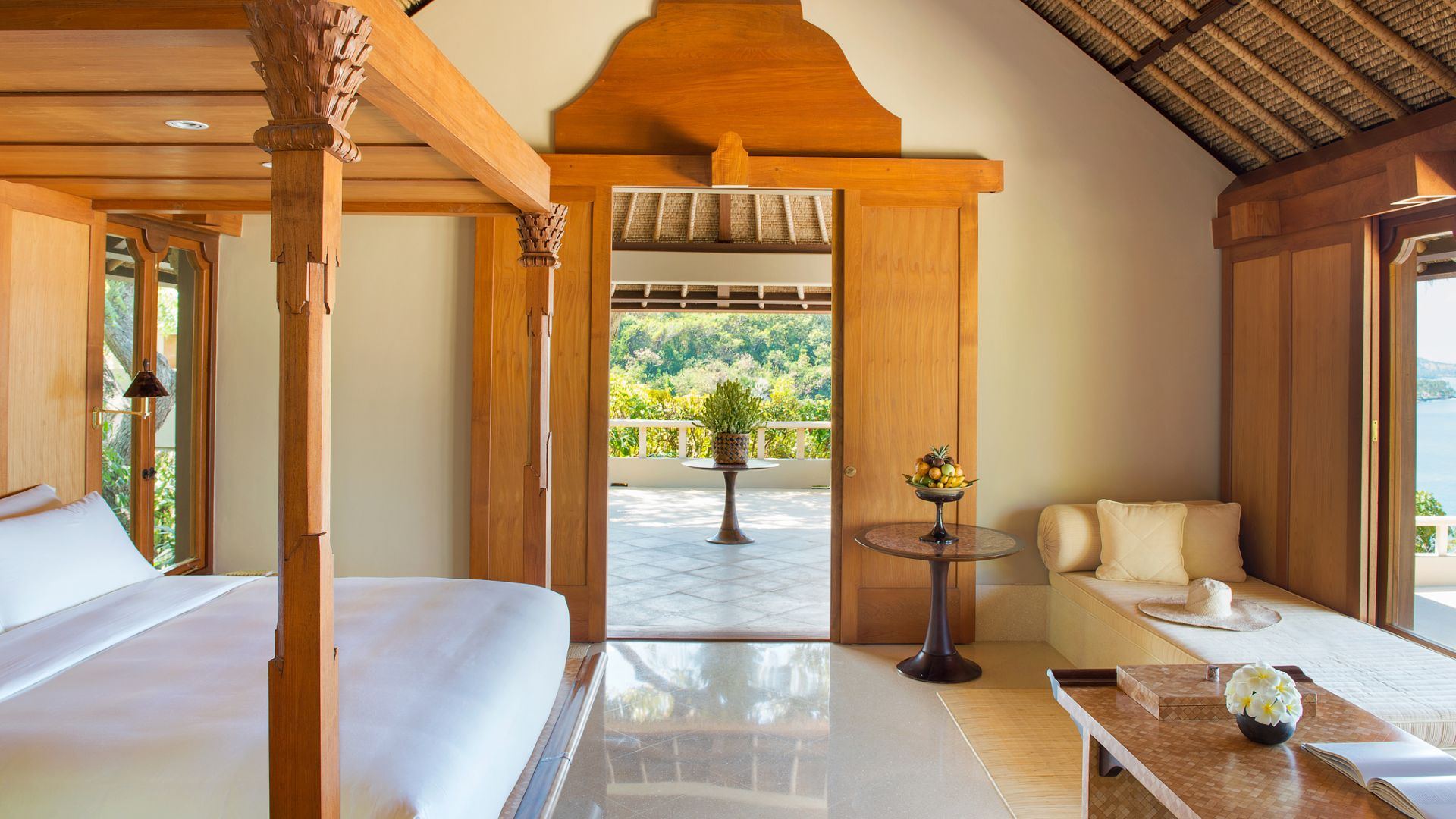
Inside, the same restraint carries through: dark wood, a four poster bed, and doors that fold fully open onto the terrace so the room and the jungle never feel entirely separate.
Where we actually ate
Food up near the main pool is genuinely better than what you get down at the Beach Club, but we ended up eating there most days anyway. Barefoot, plates balanced on our laps, in no hurry to go anywhere. Officially Amankila runs four dining venues, spread across what feels like two zones, up by the pool and down by the sea. Ask nicely and the kitchen will happily build you something entirely off menu, quietly, no fuss attached. Dinner up top has its own kind of magic too, candlelight and live Balinese xylophone players some evenings, incense drifting from the shrines near the restaurant, the whole scene feeling a little mystical by the time the second course arrives.
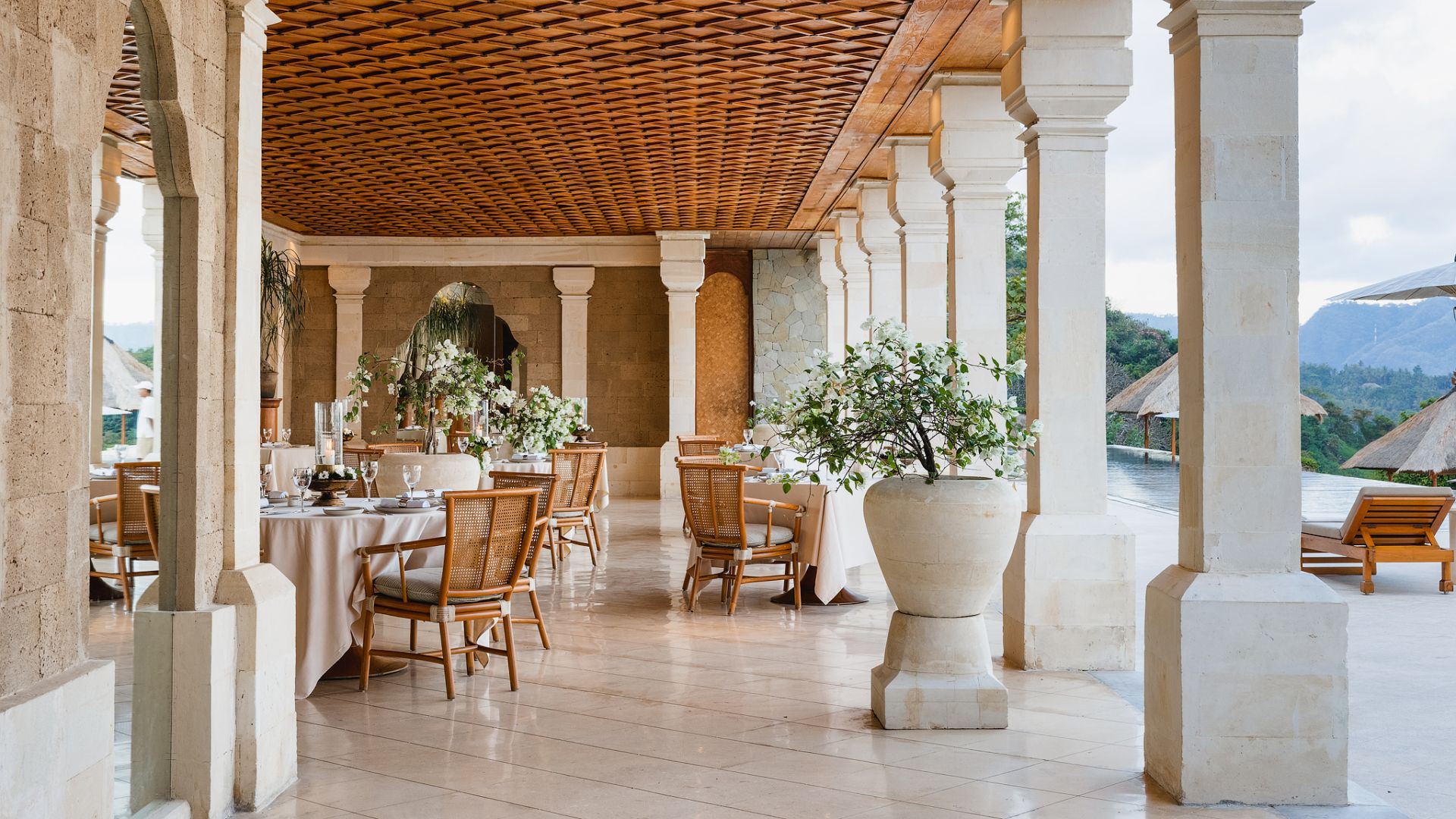
One evening we ate off property entirely, at Sea Salt, over at Alila Manggis further down the coast. The Amankila chef had called ahead himself to walk our preferences through with the kitchen there before we'd even arrived. Nobody made a thing of it. It just happened, the way most of the good moments here do.
What actually stayed with me
What actually stayed with me longest, more than the pool or the beach or any single meal, was the people. I've had long, unhurried conversations with staff who've worked here for years. Not about the hotel. About their families, their villages, what this coast looked like before Amankila was built on top of it. One older staff member described that same stretch of coastline from his own childhood, and hearing it cut straight through the whole production of the place in a way nothing else quite managed. I'm aware even that isn't fully innocent. Staff remembering returning guests and making the time for exactly that kind of conversation is still a trained standard doing what it's meant to do. It didn't feel any less real while it was happening.
The tags on the suitcase
There's a particular kind of guest this hotel attracts, and after a few days you start recognising the type without trying. Every Aman stay ends with a small leather luggage tag. Among the regulars it's practically a competition to have as many clipped to your case as possible, a small, portable scoreboard of which Amans you've earned. I understand the impulse more than I'd like to admit. It's exactly what had me hunting for folded chargers on day one instead of just enjoying the view. No hotel in the group seems to pull that instinct out of people quite as hard as this one does. Maybe because no other Aman carries this much reputation to live up to.
Somewhere below the cliff, every single morning, before most of those same guests are even awake, someone clears the black sand of whatever the tide dragged in overnight. There's a refinery down the coast and tankers pass offshore all day. Nobody mentions it, and it isn't listed anywhere as an amenity.
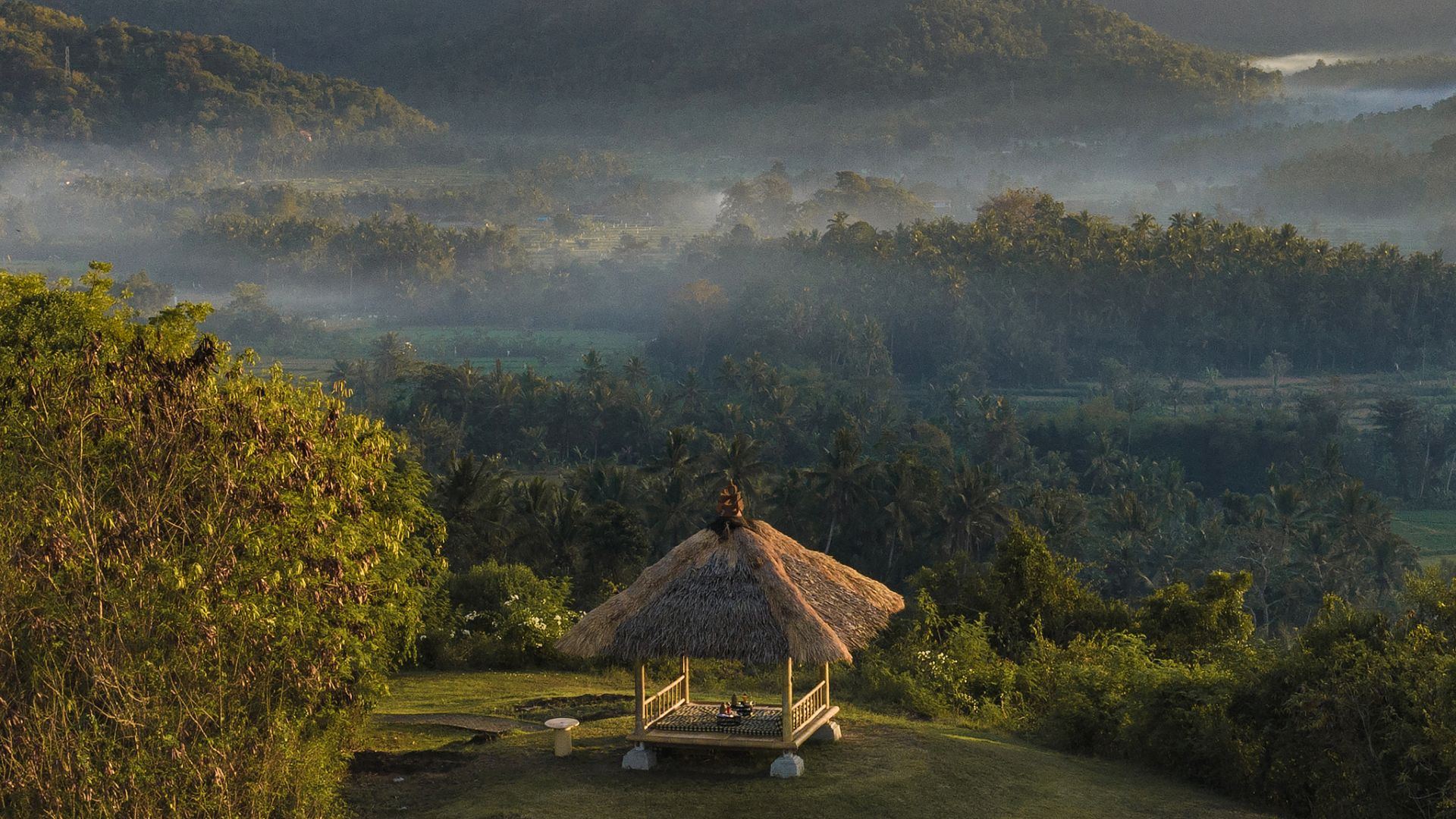
That's really the whole hotel in one image. Amankila spends every day quietly editing the version of itself, and of this island, that you actually get to see. Whether that's a tribute to the place it borrows from or simply a very well built way of improving on it, I've genuinely never settled, and I don't think I'm supposed to. What I do think is that Amankila works less like a hotel and more like a mirror. It shows you exactly how badly you want the myth to be true. Then, if you stay long enough to stop checking, it lets you have something quieter and more real instead.
Adrian Zecha built this entire philosophy and doesn't own a share of it anymore, the company having changed hands more than once since. None of that touches this hillside much, day to day. The beach still gets cleared every morning. The offerings still get laid. Whatever Amankila is now, and whoever it now technically belongs to, it's still the most beautiful hotel on this island, by a distance, and it took me a few days of not trying so hard to actually see that for myself.
Amankila is available through The Banjar Collective.
GET IN TOUCH TO PLAN A STAY →