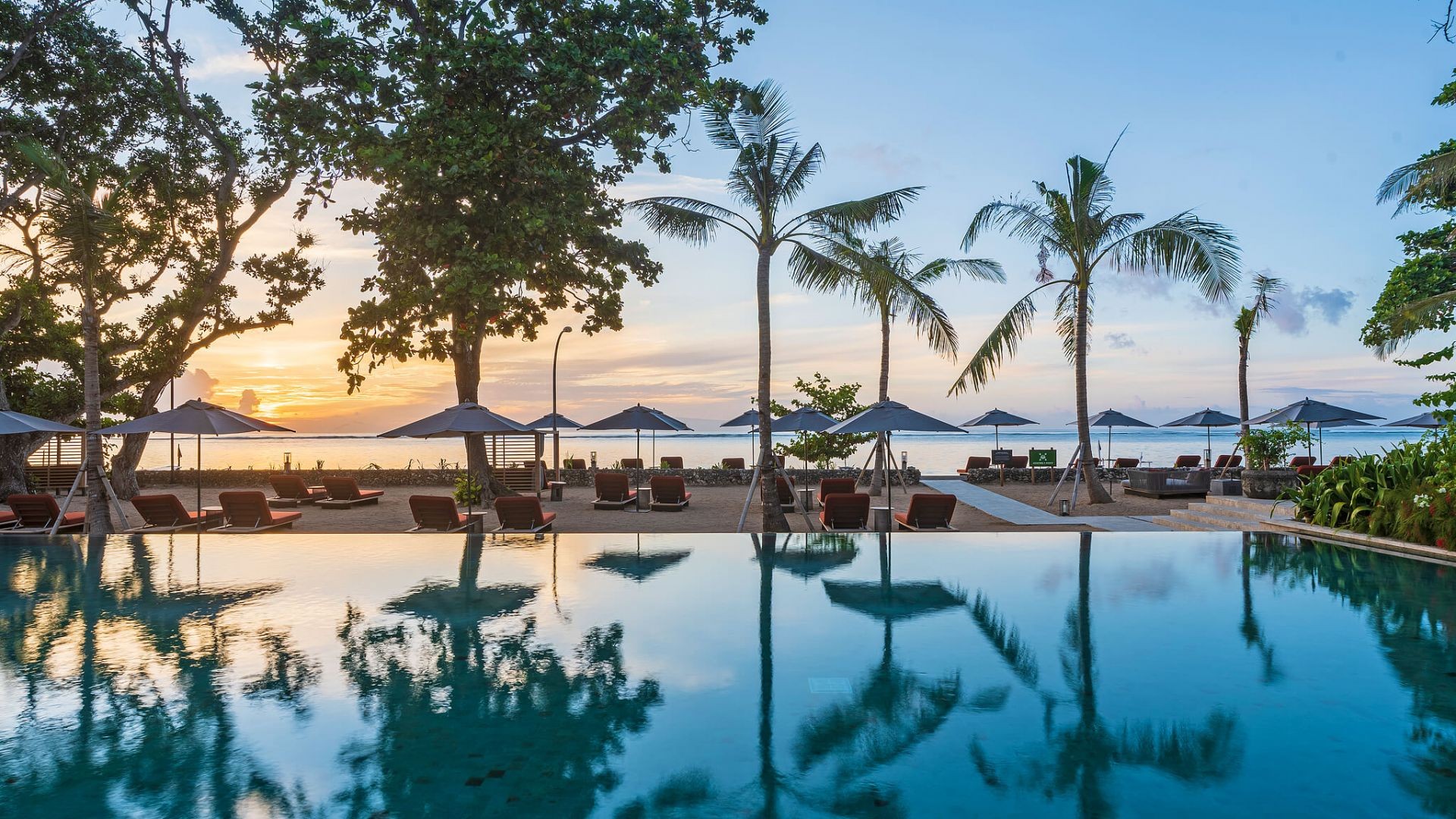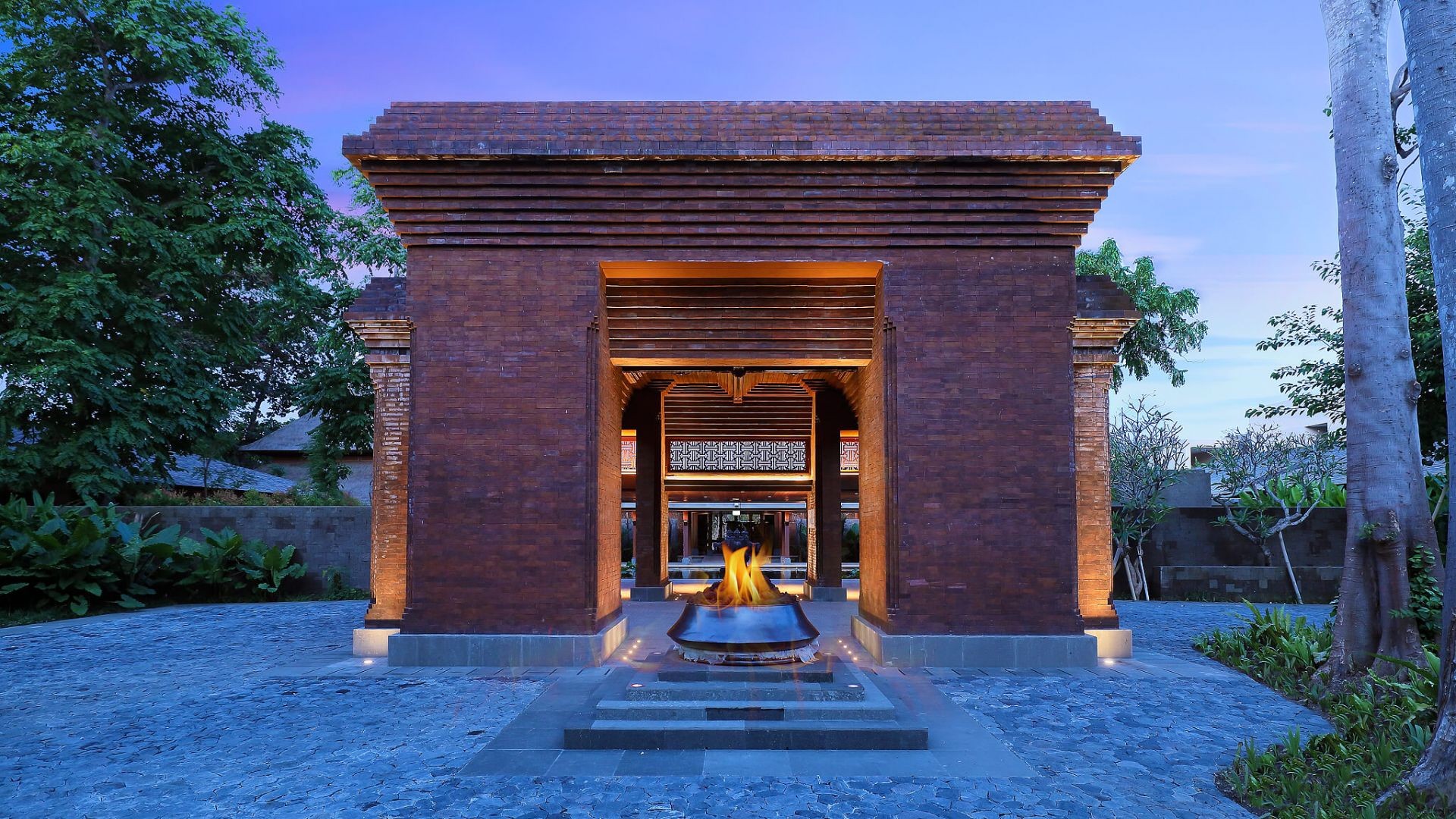
I have a soft spot for Bali's older resorts, and it comes down to something simple: they got here first. When land on this island was still cheap, the earliest hotels could buy the best plots on the best stretches of coast. As Bali's popularity grew and beachfront land prices climbed accordingly, newer resorts had to make do with far less. What you see today, especially along the beach, is a lot of hotels sitting on a narrow strip of sand and building backward from there, like a funnel. That's not automatically bad. It just rarely gives you the feeling of being inside a real beach resort. It's part of why some of Bali's older, less fashionable hotels still hold a quiet advantage that no amount of clever design can fully buy back.
Andaz Bali is exactly that kind of plot. A relatively small stretch of beachfront carrying a fairly large number of rooms behind it, 149 in total across almost six hectares. And here's my actual point: I think they turned that constraint into one of the best designed resorts on the island.
How they did it
The architecture team didn't try to hide the narrow plot. Tierra Design out of Bangkok handled the architecture, a firm with a résumé built on pan-Asian hotels rather than purely Balinese ones. Spin Design Studio from Tokyo did the interiors, in the same spirit. Together, they built a village instead of a hotel. Low rise clusters of rooms wrap around a series of hidden courtyards and ponds. Everything is laid out according to Balinese cardinal directions, a principle that actually matters in Balinese Hindu belief rather than just looking nice on a floor plan. Mature trees, some over 80 years old, weren't cleared to make way for construction. The buildings were built around them instead. Roughly 70 percent of the property stayed green landscape.
The result doesn't read as a beach hotel with a big lobby and a straight shot to the sand. It reads as a neighbourhood. There's no single grand entrance. You wander through courtyard after courtyard, past red brick walls, a material with real roots in traditional Sanur construction. Only eventually do you reach the Village Square, and only later, the beach itself. One secluded pocket, the Dukuh area, tucks ancient banyan trees and garden villas into their own quiet corner. It's a village within the village. I've walked through this resort more times than I can count, sat down, walked again, and kept noticing new details every time. It's an extraordinary piece of design.
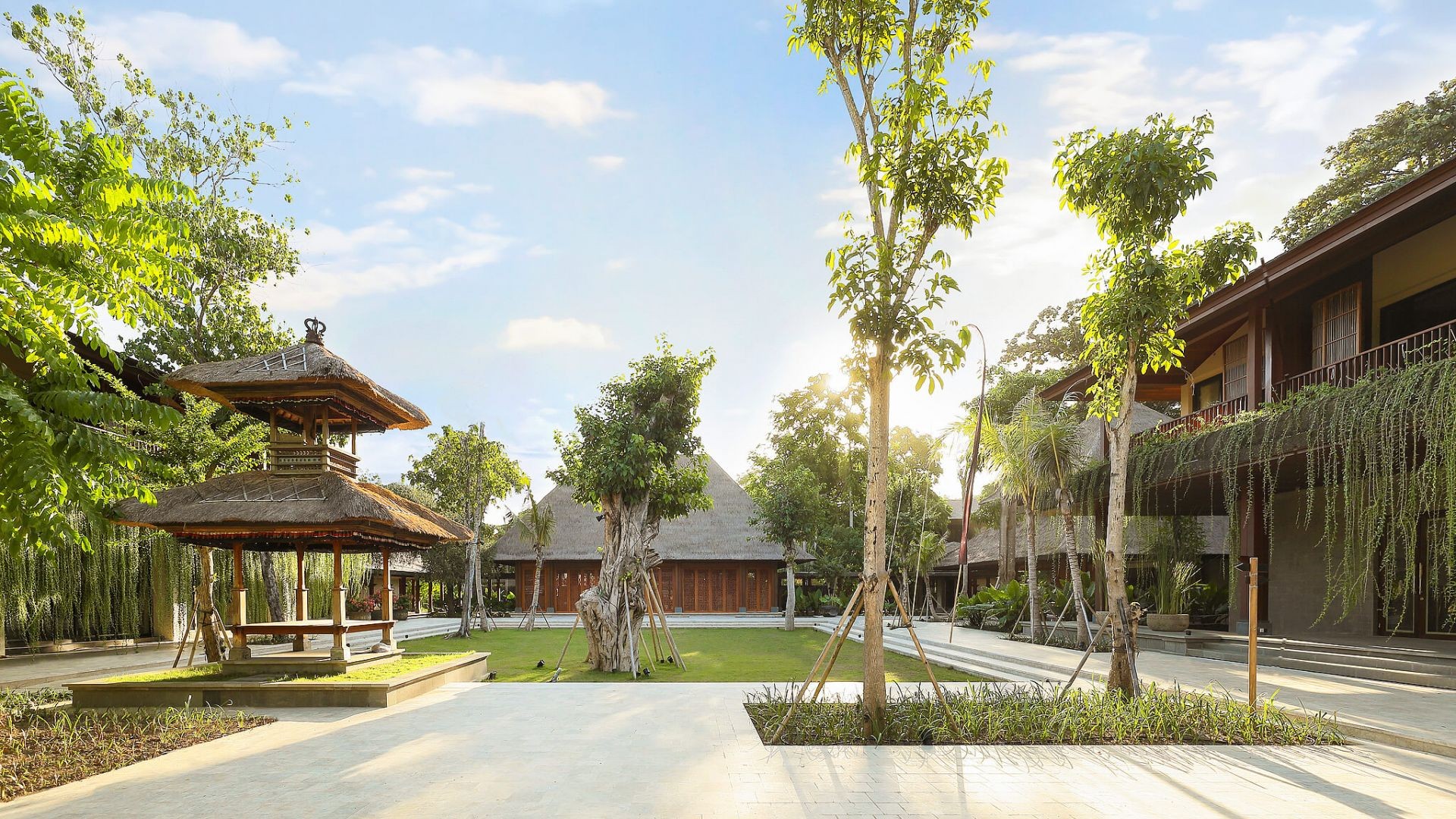
What that engineering actually feels like, in practice
All that intention comes with a trade-off, and it's worth being honest about it. This is a heavily engineered hotel. Nothing here happened by accident, and it doesn't try to feel like it did. It never fully commits to one single idea of Bali either. It's authentic in places, those 80 year old trees growing straight through the architecture aren't staged. But it's also stitched together from several aesthetic languages at once: contemporary, traditional, faintly Japanese in restraint, faintly tropical-resort in scale. It sits between all of them rather than choosing one.
That same instinct shows up in smaller, more day-to-day ways too, always composing the picture first. We wanted to cycle along Sanur's beach path more than once, and the bikes were always already lent out. After rain, some of the stone paths turned properly slippery, with puddles pooling in spots that clearly hadn't been designed with drainage in mind. None of it ruins a stay. It's a pattern worth knowing about going in: this is a resort composed for how it looks first, and how it functions day to day second. Despite all that, for a lot of newcomers to Bali, I still don't think there's a better manufactured version of that classic Balinese feeling anywhere else on the island.
A hotel trying to please everyone
That same instinct runs into the service too. Service here leans more standardised than personal, the kind of professional, well-drilled hospitality you'd expect at scale, rather than the individual, remembers-your-name warmth some smaller resorts manage. Everyone we met was genuinely trying hard, it just isn't where the hotel's real strength lies. There's an old saying that a cook can't please every mouth at the table. That's roughly how the resort felt to me more than once, visibly trying to please absolutely everyone, without always having the nerve to make a clear choice instead.
Where that plays out most directly is in how complicated this hotel is to book correctly, and it's worth telling you exactly how we learned that the hard way.
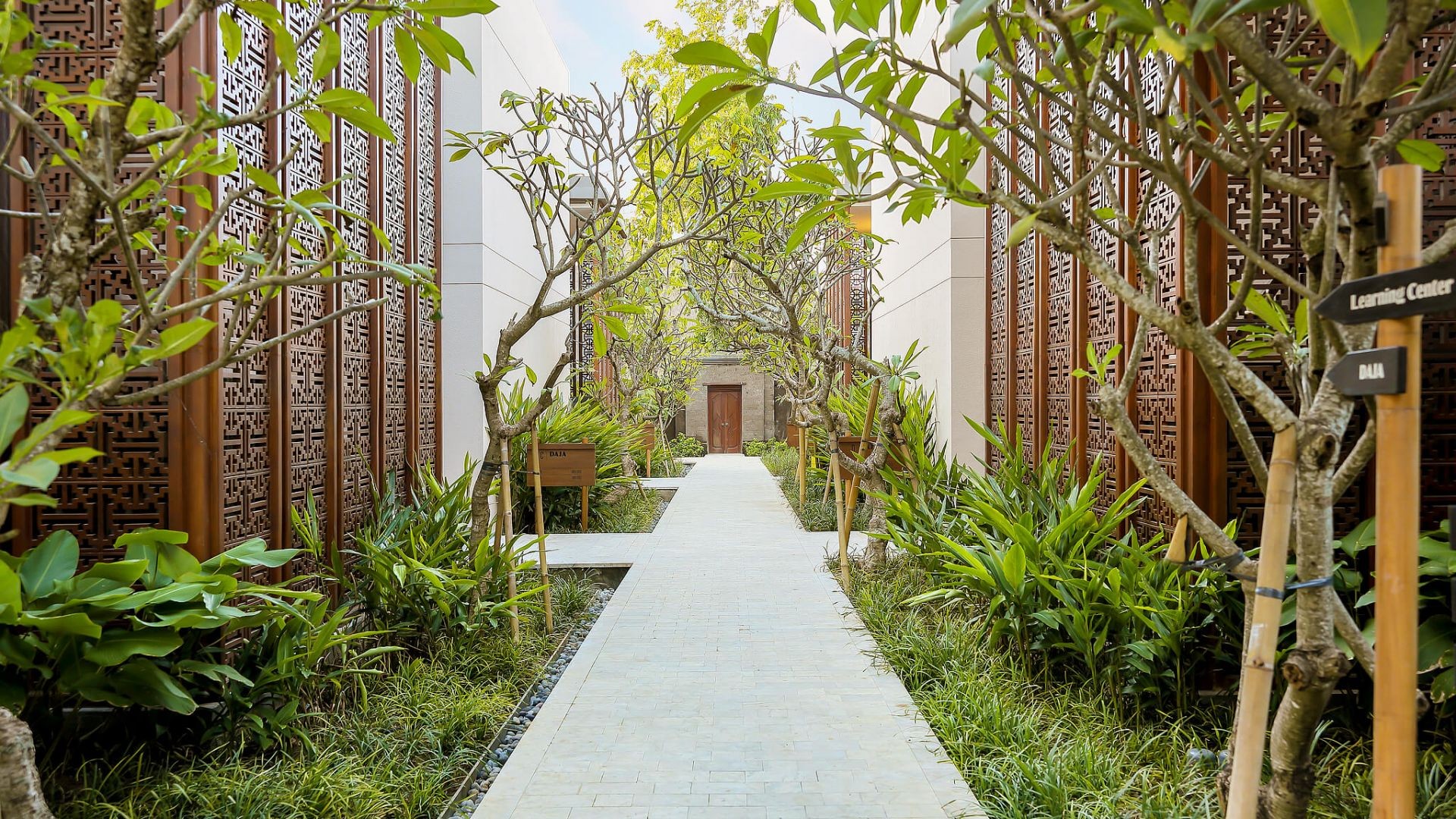
Two stays, two completely different hotels
The property runs from the beach all the way back to the busy main road, and the rooms clustered around the Village Square and lobby sit closest to that road. On our first stay, we felt it, real noise and even vibration from the traffic outside. The second time, having learned from that mistake, we booked an Andaz Suite near the Shanti Pool instead, well back from the road, closer to the lagoon. It made an enormous difference. That's also where a butler came with the room, and the improved service pulled the whole stay together in a way the first visit never quite managed. Two stays, two genuinely different hotels, and the difference came down entirely to which room category we'd chosen.
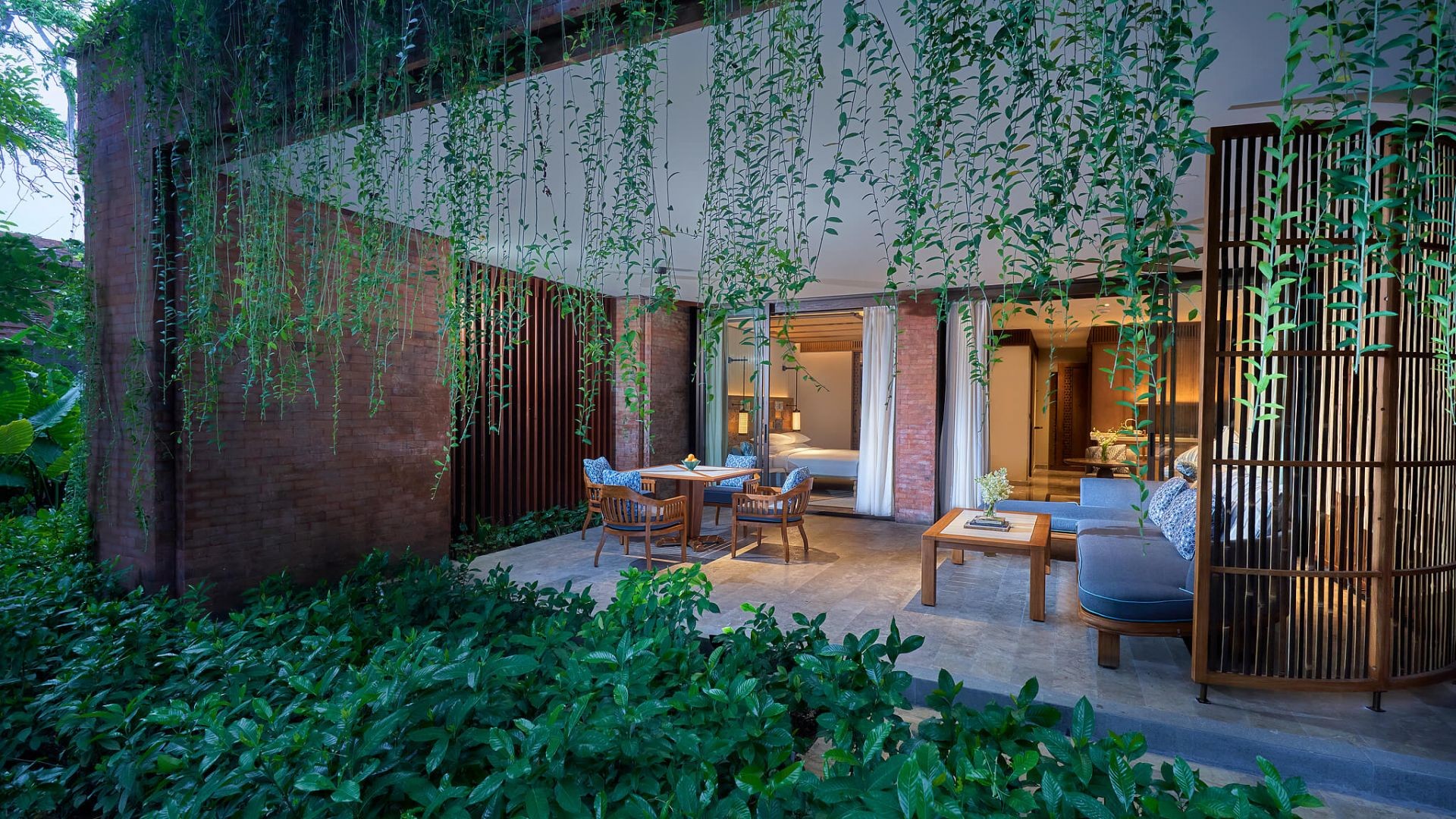
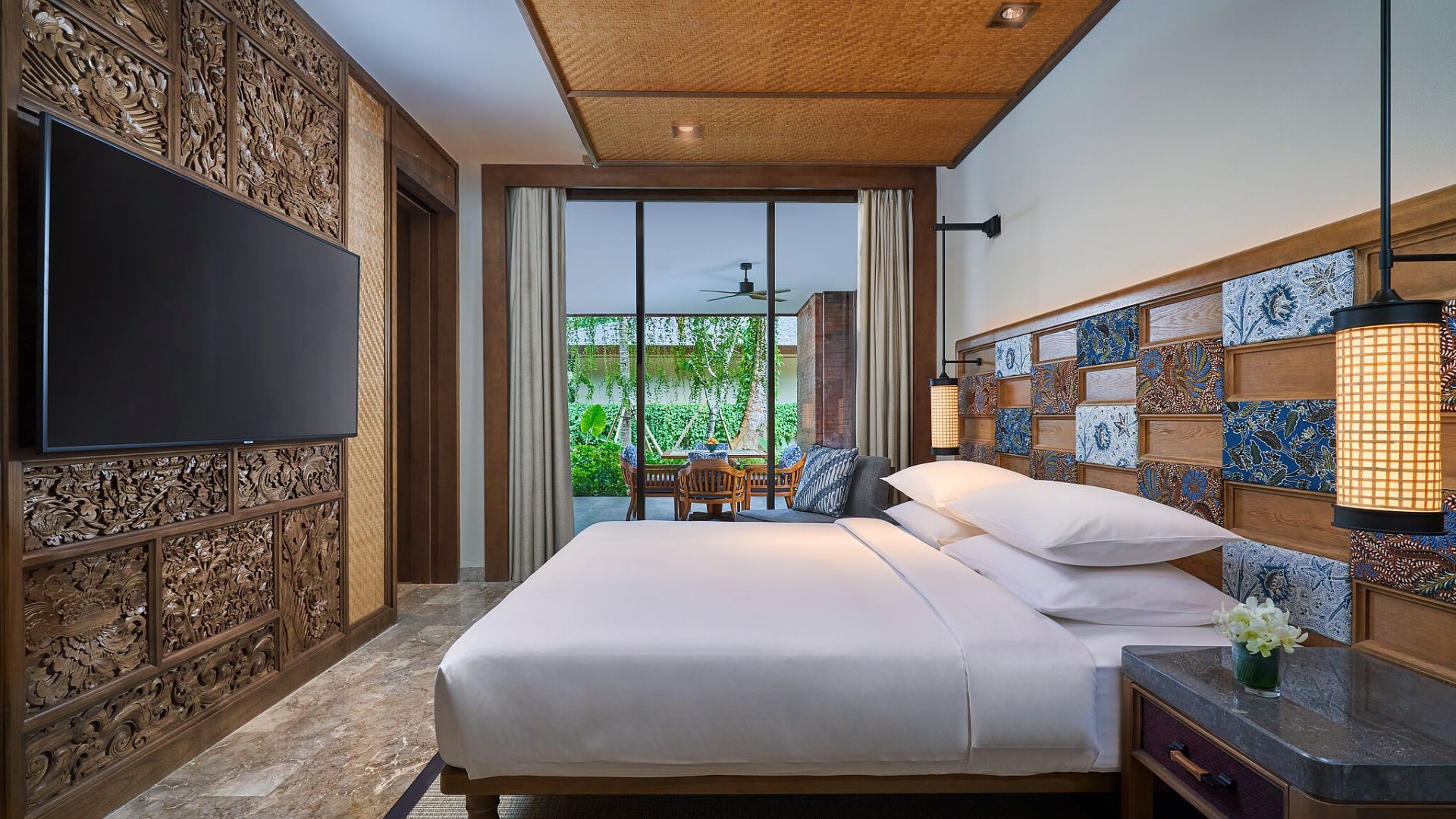
The rooms, suites and villas themselves are designed with real care regardless of location. Red brick, timber, batik and ikat textiles. Some furniture pieces are genuinely reclaimed from the old Bali Hyatt, remade for this new chapter.
The food, and a small stretch of Europe
Once we'd settled into the right room, it was the food that impressed me most. Most of it centres on Village Square, which turns genuinely beautiful after dark, four different restaurant concepts sitting side by side. Breakfast draws from all of them at once, small plates from each kitchen. We became fans fast: cheese crepes, a prawn omelette, pancake soufflé, French toast, matcha granola. We couldn't get enough. Every morning became its own small adventure in what to try next. Back in the room, a genuinely generous free minibar and, oddly charming, a small jar of snacks waiting for us, the kind of tiny gesture that costs the resort very little and stuck with me anyway.
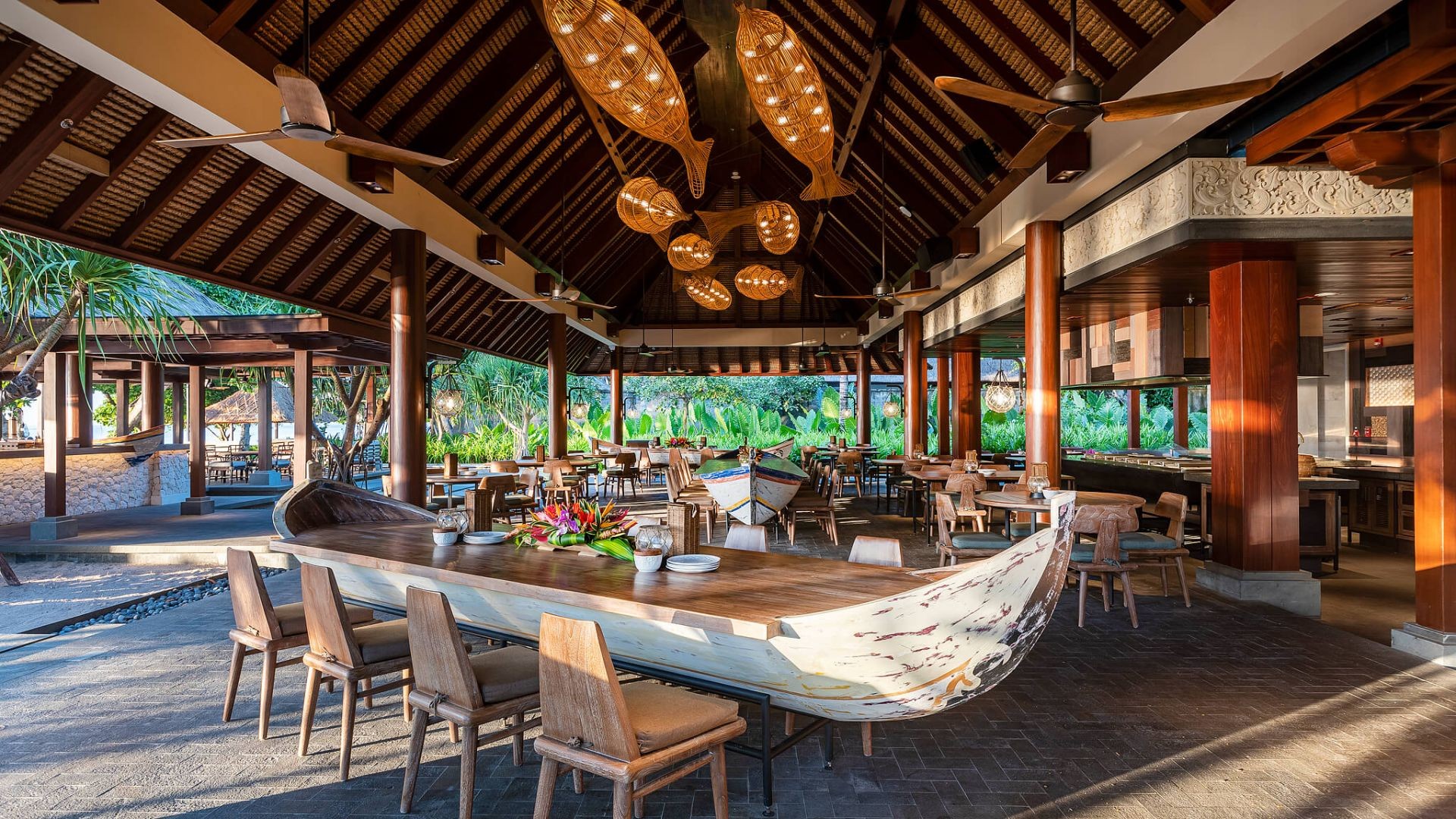
Fisherman's Club, the beachfront restaurant, was our favourite for both lunch and dinner. When we wanted something different, Pizzaria next door at the sister Hyatt Regency became a regular habit. Proper wood fired pizza right on the beach, charged straight to our Andaz room without a second thought. Between the two properties, there's genuinely more choice here than the resort's own restaurant count suggests. Whatever the resort achieves indoors with its architecture, sitting at either one facing the ocean is its own kind of pleasure, watching people walk and cycle along the kilometres long beach path. Sanur is the only place in Bali where that path gives you something close to a European promenade feeling, full of life in a way no other part of the island quite matches. Because the resort turns so inward on itself, we actually spent more time at the Shanti Pool than on the beach itself, which never fully shook off the feeling of being a bit too small for what surrounded it.
Who this is actually for
Andaz is genuinely popular, and it can feel that way, busier and more crowded at times than the quiet courtyard photos suggest. For a lot of travellers, it's still close to the ideal Bali hotel. But you need to know what you're getting into: this is Sanur, not a private cove, and the sea itself plays a smaller role here than the resort around it. It's a deliberate, almost theatrical version of Bali. It's also genuinely beautiful. Whether that combination works for you is a real question worth asking yourself honestly. Book the wrong room category here and it can define your entire stay, for better or worse.
Even with that caveat, I think this is one of the best, if slightly ambiguous, hotels I can recommend to people. It isn't extortionately priced, and it's easy to reach. Get the room right, and I don't think you'll find a more fully realised version of a modern Balinese village anywhere else on the island. If you'd rather see the full range of what we stand behind, have a look at our stays.
Andaz Bali is available through The Banjar Collective.
GET IN TOUCH TO PLAN A STAY →