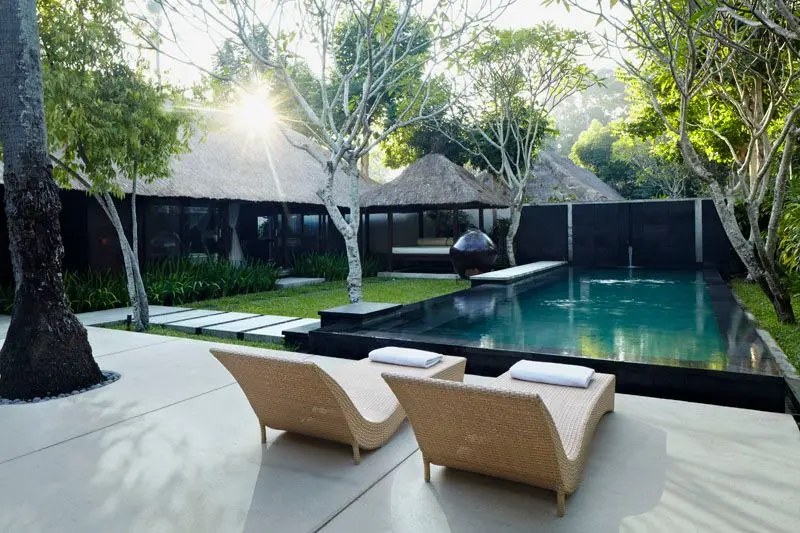
No public pool. No direct access to the beach. No real communal space at all. On paper, Kayumanis reads like a resort missing half its checklist. Walk through the gate into your own villa, and within a day you stop noticing any of it was ever missing.
A small chain with a very specific idea
Kayumanis isn't trying to be a household name. It started in Ubud in the early 2000s. Nusa Dua followed. Jimbaran opened in 2006, the fourth property, working from the same blueprint each time: no more than twenty-something villas, real space, and service built around knowing exactly who you are. It's a small, distinctly Indonesian answer to the bigger villa brands. Jimbaran is where that idea shows up most completely.
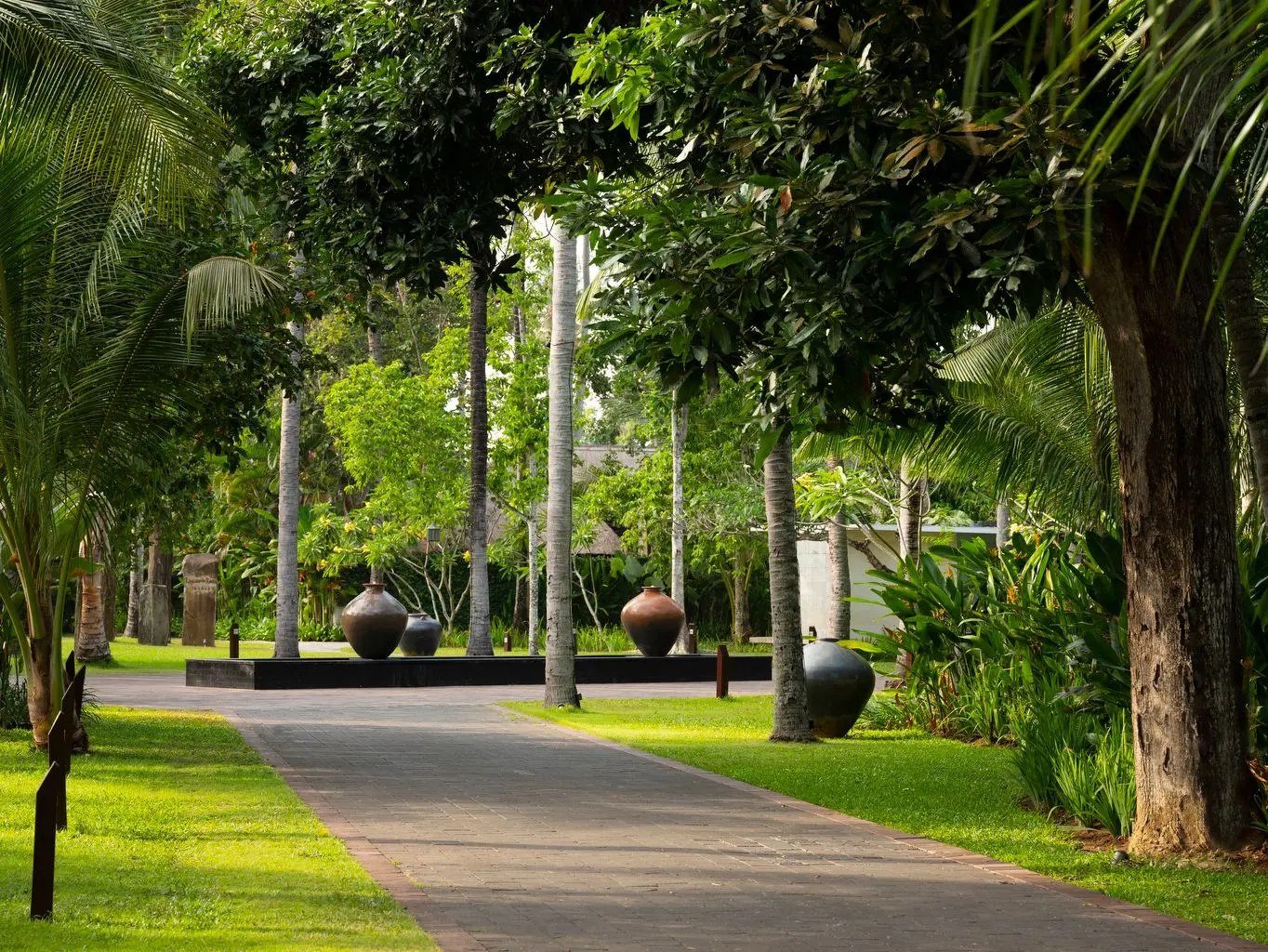
The estate sits on a former coconut plantation. Not a single tree came down to build it. The twenty villas, designed by the Indonesian architect Tan Tik Lam, were built around the palms instead. Each one carries its own name, taken from a part of the coconut tree. Ours, on a previous stay, was Klungah. It means the inside skin of a young coconut. Nobody was obligated to name the villa after that. Someone did anyway.
A road that still feels like it belongs to Jimbaran
The estate sits on a road that runs straight down to the sea, green and a little rough at the edges, exactly the kind of unpolished charm Jimbaran does so well. It hasn't been smoothed over the way Canggu or Kuta have. Walk that road to where it meets the beach and you'll usually find a handful of old Balinese men sitting together, talking, the way they probably have for decades. It's a small thing, but it makes the whole street feel like it's slipped a little out of time, right up until you turn back through the gate into the estate itself.
Inside the villa
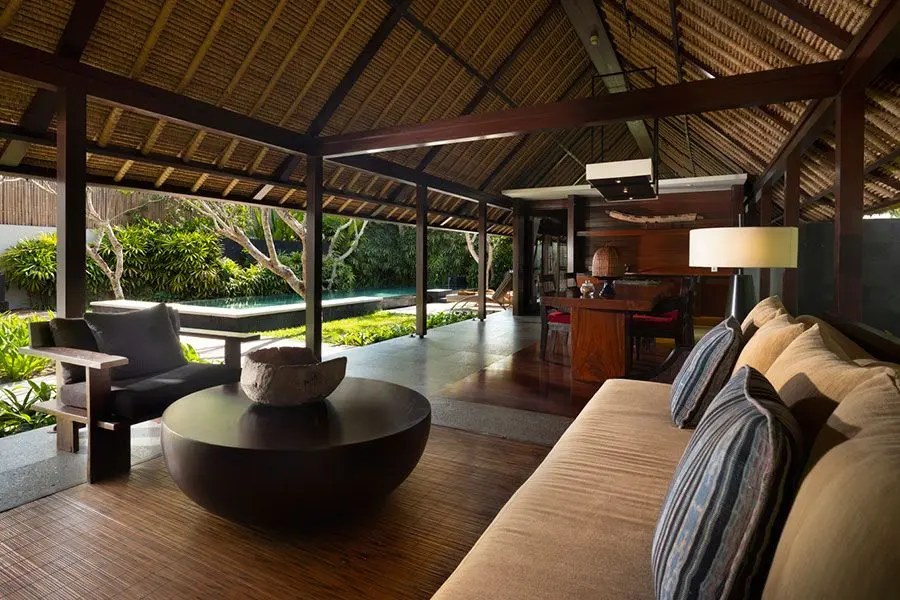
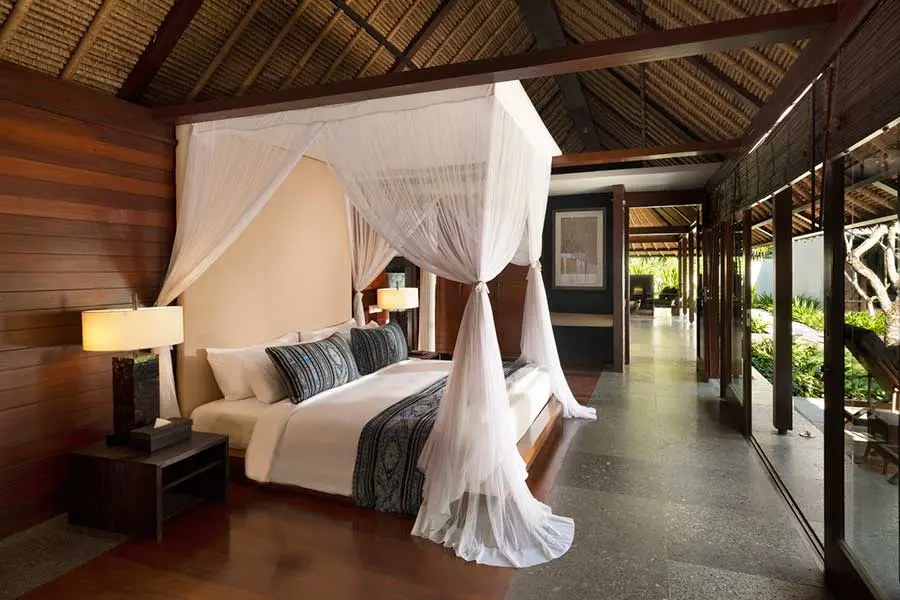
Space is the first thing you notice. The smallest villa starts at 500 square metres. You enter through your own private gate into a walled compound. No shared walls. No neighbours in sight. A semi-open living pavilion sits under a high thatched roof, opening straight onto your own full-sized pool tucked into its own pocket of garden.
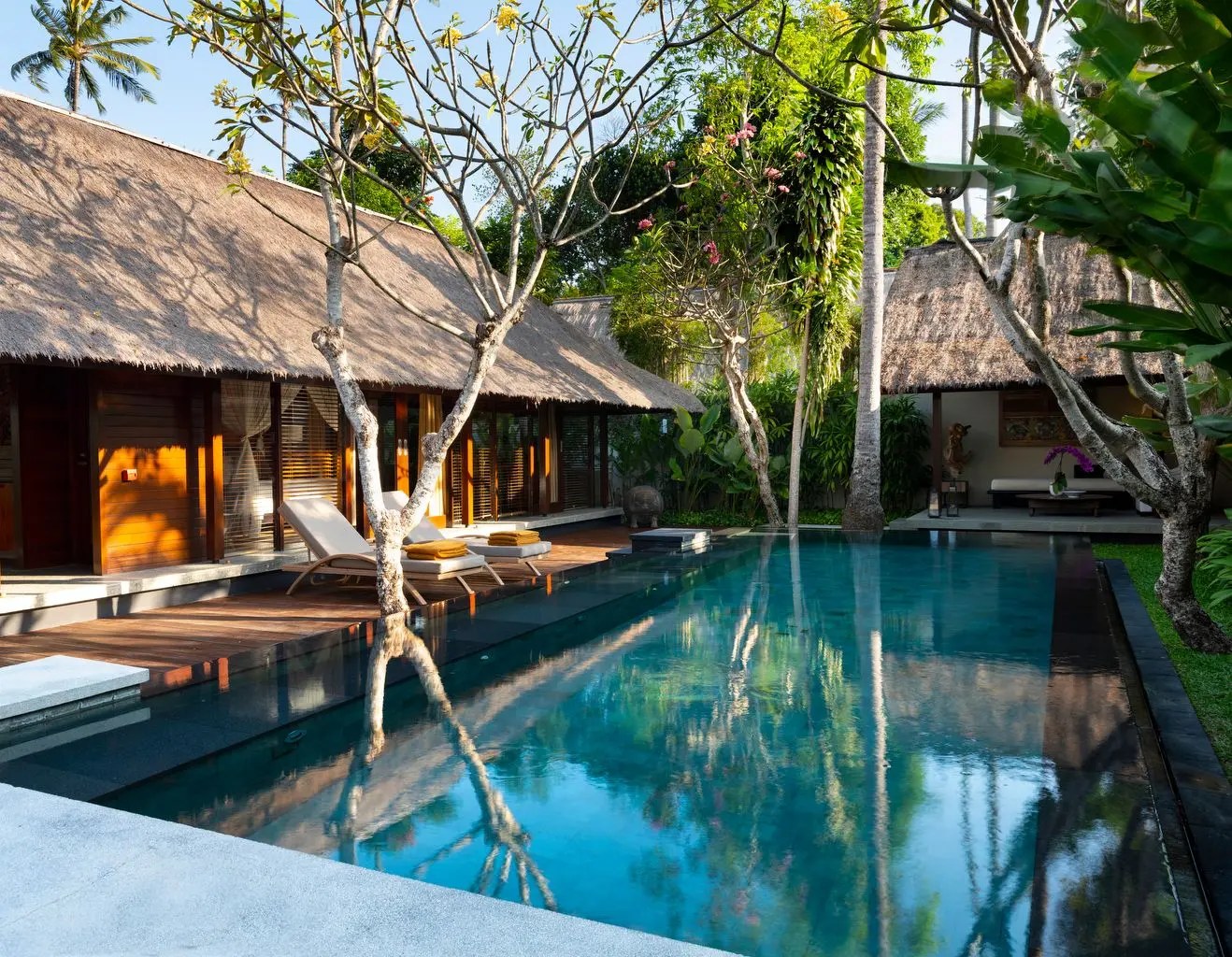
There's a proper kitchenette if you'd rather eat in. The bathroom is open-air, the tub built for two. The furnishings lean warm and local rather than showroom-polished: dark wood, woven textures, nothing imported for effect. It's the kind of space that makes you feel at home the moment you walk in. After a few days, you feel genuinely reluctant to leave it.
Generosity as the whole philosophy
Nothing here is a single grand gesture. It's an accumulation. Unlimited breakfast. Daily afternoon tea. A minibar that's actually free and properly restocked. Twenty-four hour butler service. A free shuttle. Free bicycles. None of it is flashy on its own. Together, it adds up to a feeling of being thoroughly looked after without ever being asked to pay extra for it.
That care shows up in small, sometimes stubborn ways. We arranged a short trip through our butler, who talked us out of hiring a local guide because, quite plainly, he thought he knew the area better himself. He did. It was a small outing, barely an afternoon, but the confidence behind it said something real about how the butlers here operate: less like staff following a checklist, more like people trying to keep you a little further from the well-worn tourist trail. Another guest told me their own version of the same instinct, a private cooking class in their villa that started before sunrise, with a walk to the fish market alongside the chef to choose the catch together before a single pan was heated. Service built around the person in front of them, rather than a fixed script, is something I haven't seen many places pull off as naturally as Kayumanis does.
A restaurant worth racing the clock for
By day three, I had a routine: book the massage early, then make sure I got to dinner in time for the duck.
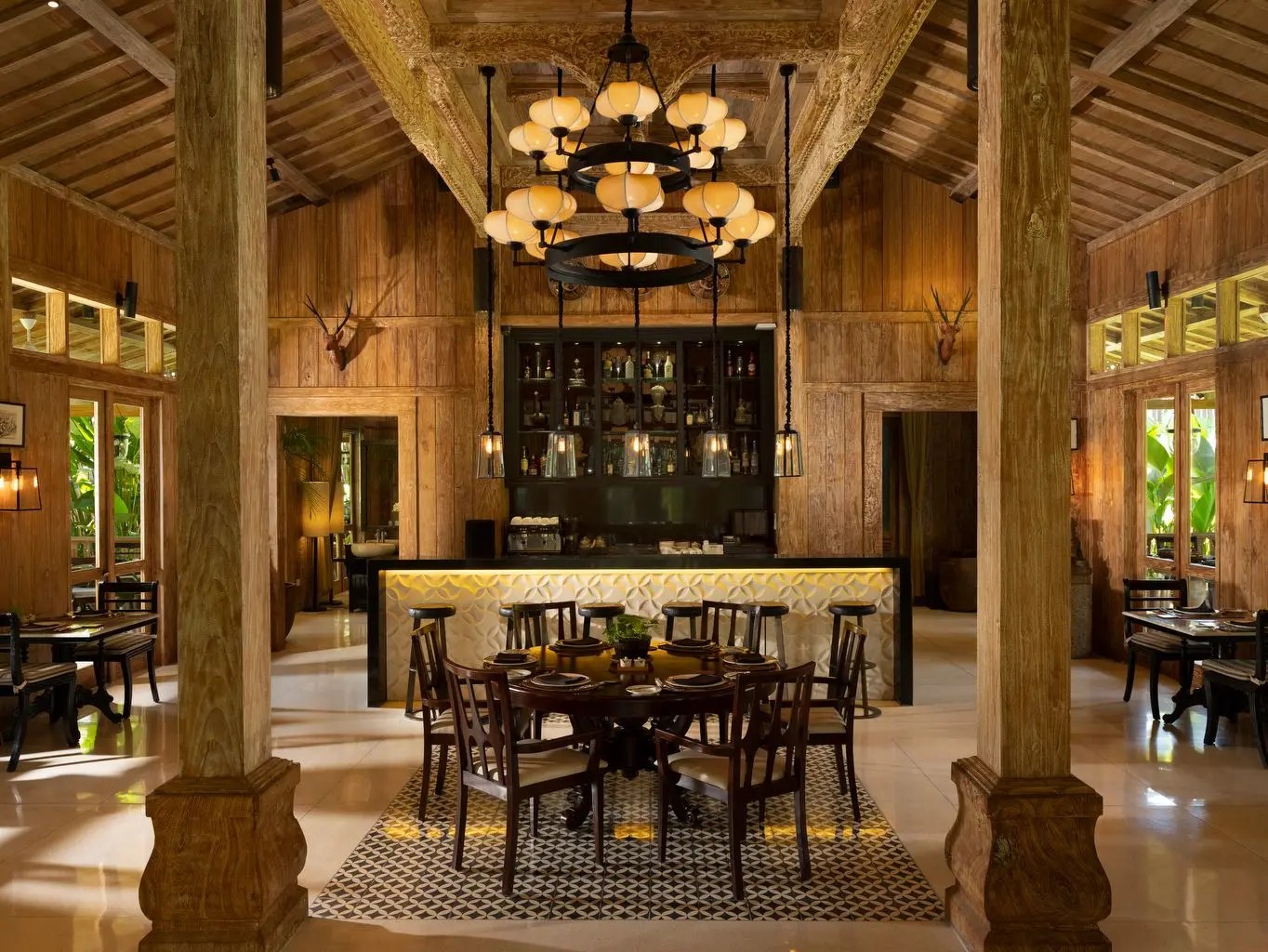
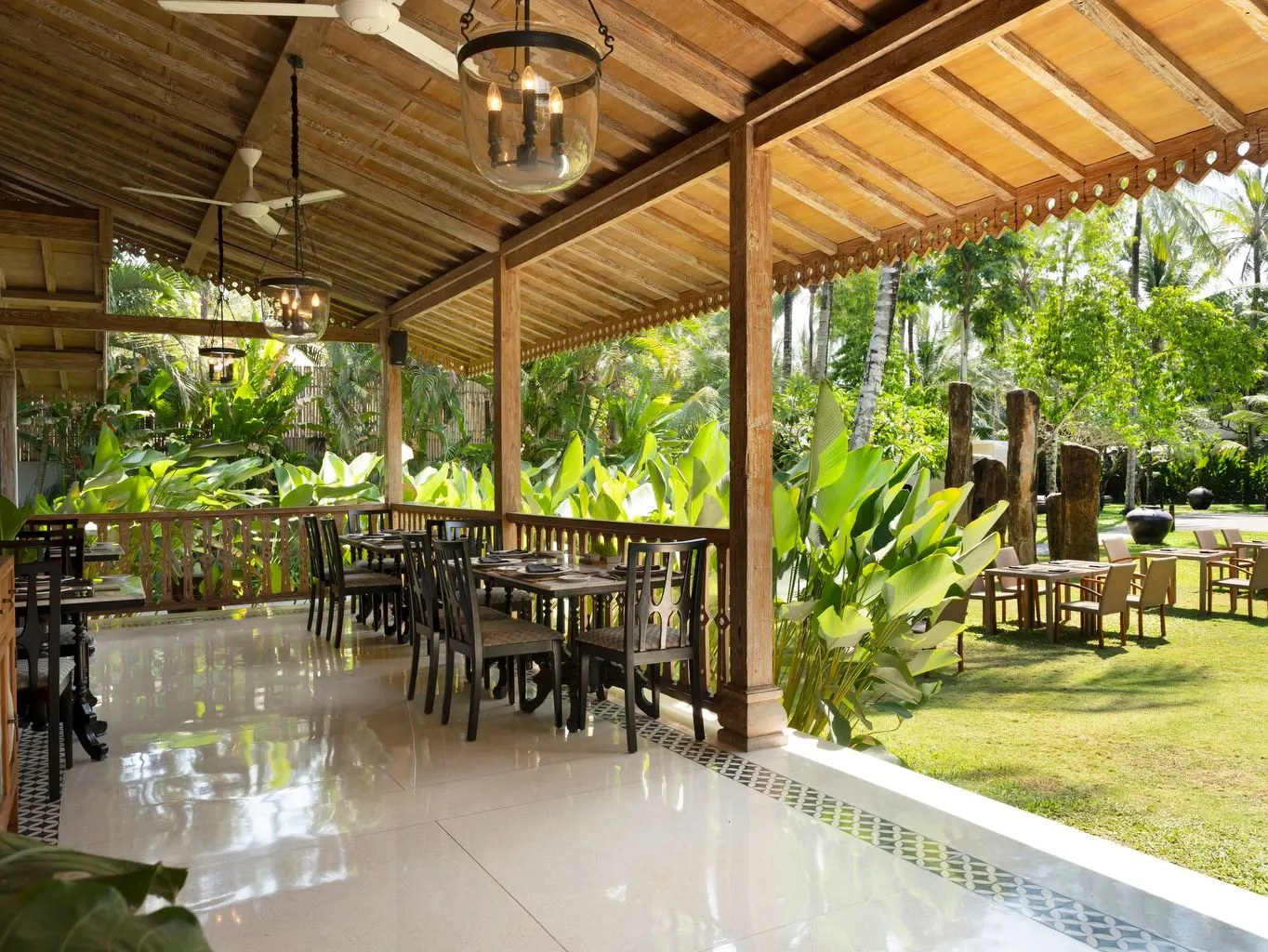
The restaurant is a full replica of a Javanese joglo, built almost entirely from hardwood shipped over from Java. Clay roof tiles rise to a sharp peak. A veranda wraps the whole structure. It doesn't feel like a resort restaurant. It feels like somebody's ancestral home, repurposed with real care. The kitchen matches the setting: proper, authentic Indonesian cooking, the kind most hotels soften for foreign guests. Their signature dish is bebek panggang mekudus, a smoked duck rubbed in Balinese spices. Only twelve portions are made a day, and it regularly sells out before dinner service ends. More locals eat there than guests, which tells you everything about how the kitchen is actually judged. One more thing almost nobody mentions: Cuca, one of my favourite restaurants on the island, sits barely a hundred metres from the gate.
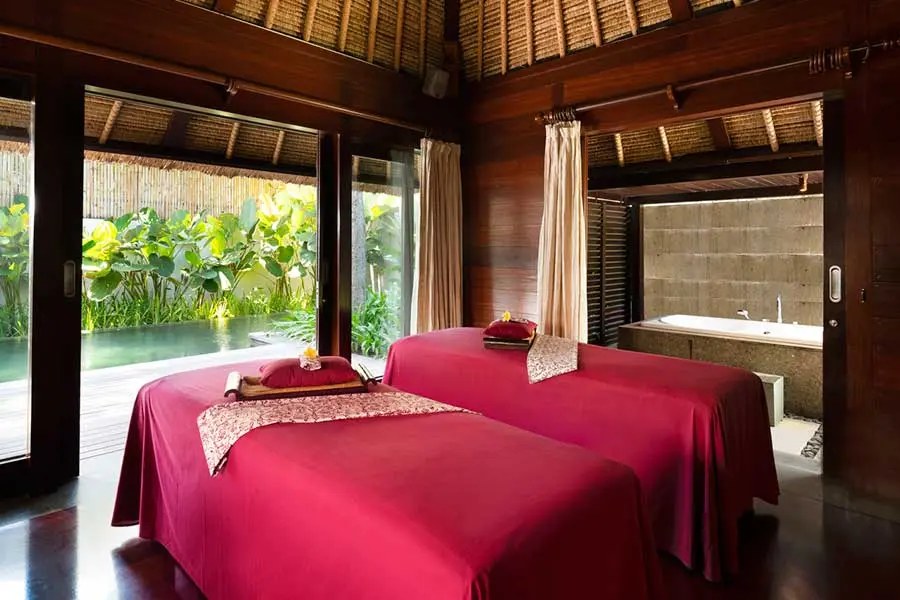
The spa is small, just a converted villa, and I wouldn't call it a destination on its own. I went back every single day anyway. The massages were that good.
What's missing, and who this is actually for
If I'm honest, I did miss a shared space, somewhere with a bit more life to it. I like that kind of energy myself. But Kayumanis is answering a different question entirely. It's exceptional villas and real five star service, at prices that are genuinely hard to match on this island. Well timed, a stay can run around 250 euros a night for the amount of villa you're getting. I had genuinely dreamy days here, though I made sure to get out and explore rather than stay put the whole time.
No pool. No beach. No communal heart. I never once missed any of it, and I'm apparently not alone. More than once here I met guests on their third, fourth, fifth stay. It's the same quiet loyalty I've seen at The Oberoi, earned less through spectacle than through never once being disappointed. If you're purely a beach person, I'd point you elsewhere. If a beautifully private villa with real service sounds like your kind of trip, this is one of the best value plays in Bali. If you'd rather see the full range of what we stand behind, have a look at our stays.
Kayumanis Jimbaran is available through The Banjar Collective.
GET IN TOUCH TO PLAN A STAY →